🔹 This is the 7th post in my blog series,Veteran Transitions Across Borders: Bridging Civilian and Military Worlds, which explores the challenges and creative strategies shaping veteran transitions across countries and communities.
I still remember the goosebumps, and the tears I openly wept.
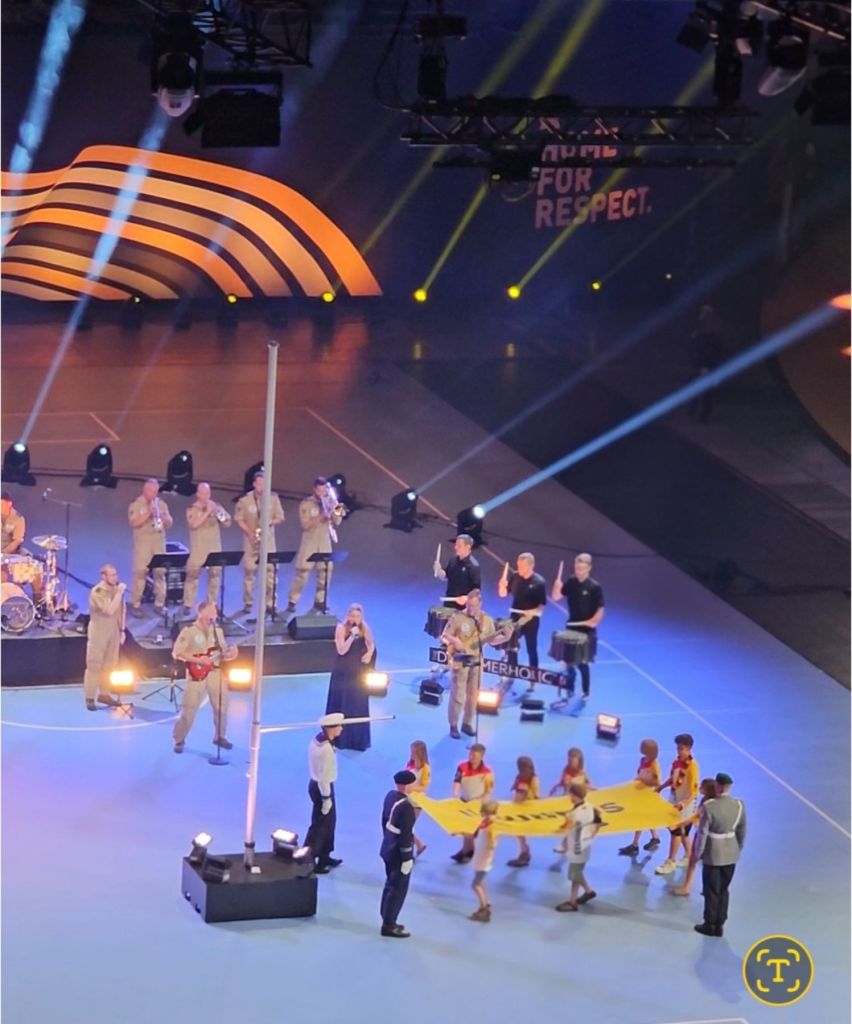
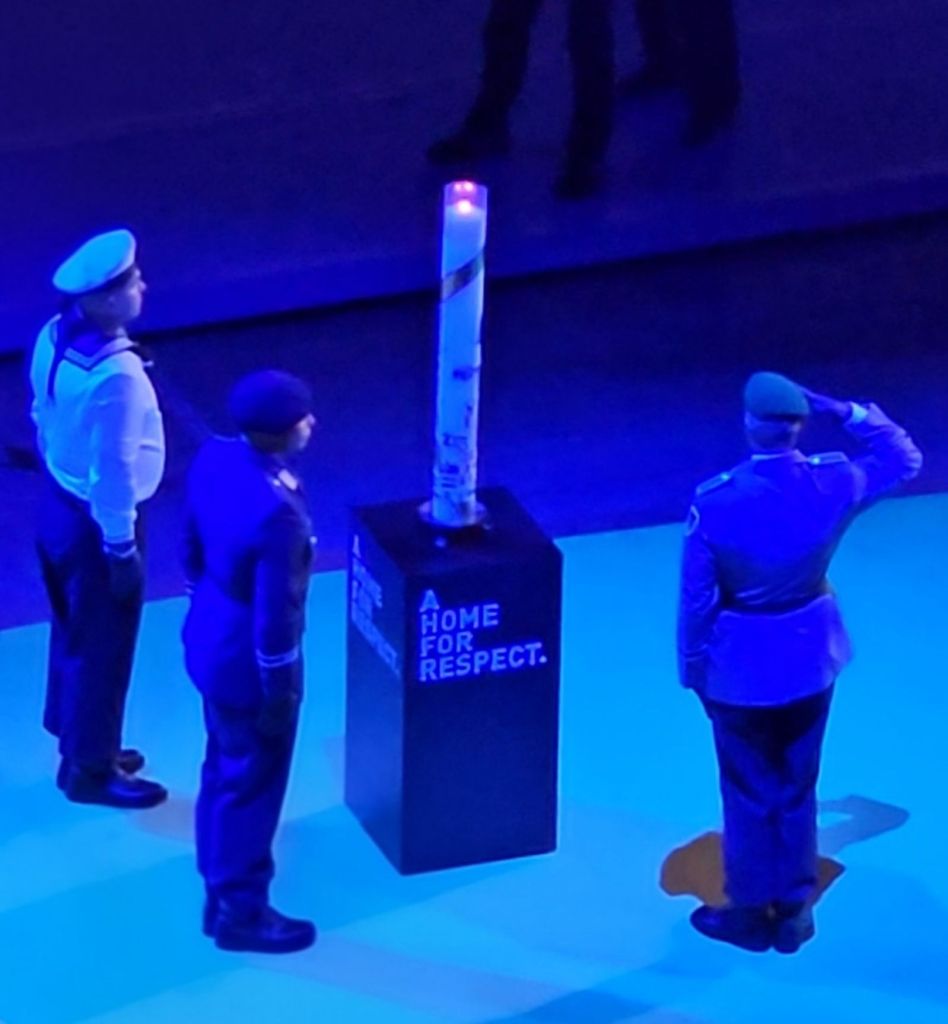
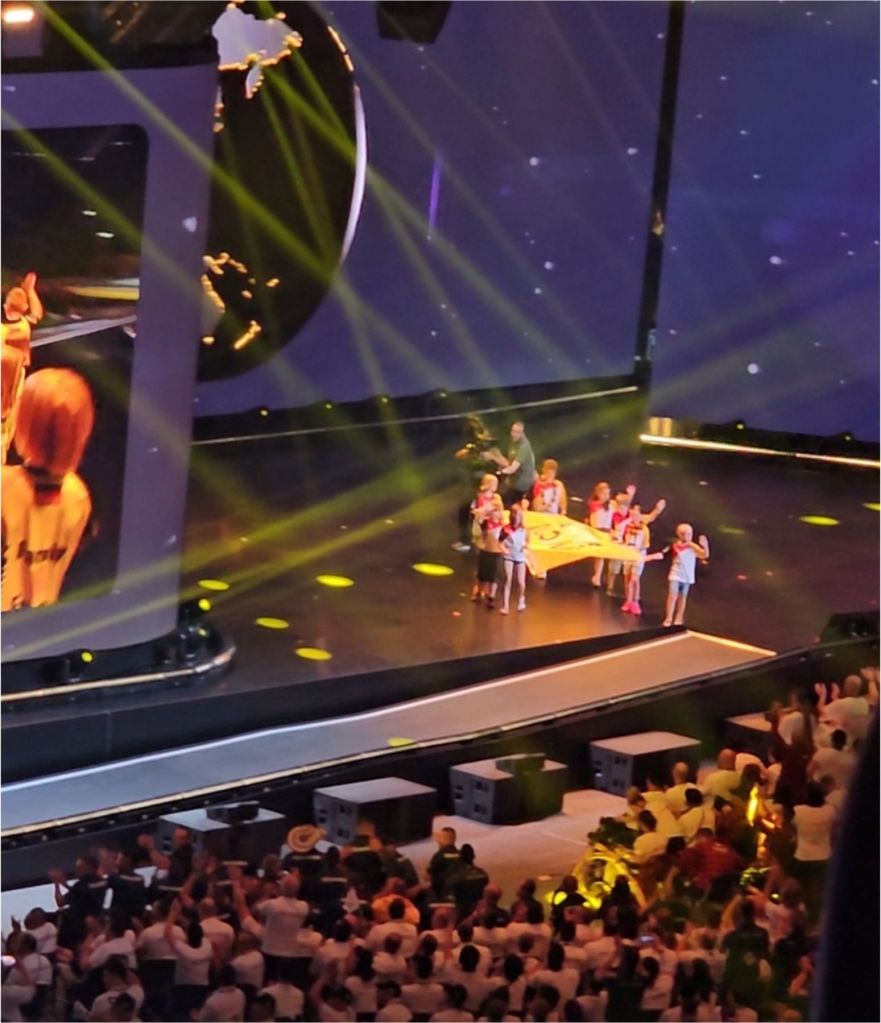
At the opening ceremony of the Invictus Games in Düsseldorf in 2023, children of Bundeswehr veterans carried the Invictus flag into the arena before handing it to members of the three services of the Bundeswehr.
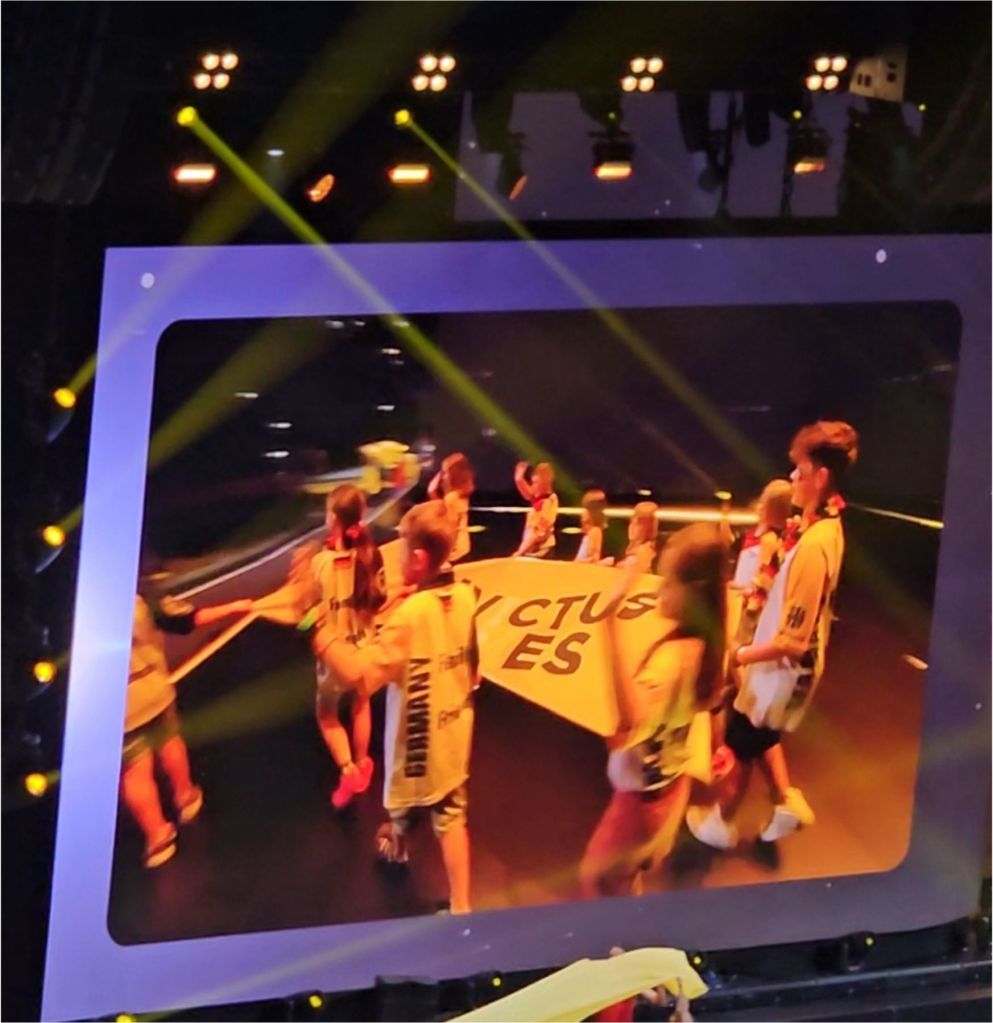
Children of Bundeswehr veterans carry the Invictus flag during the opening ceremony of the Invictus Games Düsseldorf 2023.
For me, it was a powerful reminder that the story of military service often extends beyond the individual who wears the uniform.
What struck me was not simply the symbolism of the flag.
It was the visibility of the children.
For a brief moment, the spotlight widened.
The story was no longer only about those who had served or continuing to serve.
It also included those who had travelled alongside them.
Three years later, as Germany prepares to mark its second Veteranentag on 15 June, I find myself thinking about that moment again.
This year’s theme is:
Veterans, Family und Friends
Three simple words.
Yet for only the second Veteranentag, they feel both significant and deliberate.
The theme invites us to widen the conversation beyond the individual veteran and consider the broader network of relationships that surrounds military service.
As someone who has worked with military and veteran communities in Germany (as part of the British Army Forces Germany contingent), the United Kingdom and Australia, and as a former military spouse (partner), I find myself reflecting on why Germany has chosen this theme at this particular moment.
Germany’s Second Veteranentag
While many countries have long-established traditions of recognising veteran military service, Veteranentag is still relatively new in Germany.
Established by the Bundestag in 2024 and first observed in 2025, the day seeks to recognise the service of Bundeswehr personnel while strengthening dialogue between veterans, their families, communities and wider society.
The German Federal Government describes Veteranentag as:
“Ein Zeichen des Respekts und der Dankbarkeit.”
“A sign of respect and gratitude”.
Yet as I explored the official information surrounding this year’s event, another word appeared repeatedly:
Dialog.
Dialogue.
That emphasis feels important.
Veteranentag is, of course, about recognition.
Recognition of service.
Recognition of commitment.
Recognition of contribution.
Yet it also about creating opportunities for conversation.
Conversations between veterans and civilians.
Conversations between generations.
Conversations between people who may hold very different perspectives about military service, defence and the role of armed forces in society.
The Bundestag states that Veteranentag aims to:
“Sichtbarkeit schaffen und den Dialog mit der Gesellschaft fördern.”
To create visibility and promote dialogue with society.
Those words resonated with me.
Last year, while in Cologne, Germany, around ANZAC Day, I found myself in conversation with people of different age groups who were living in Germany. As we discussed military service and society, it became clear that people held a range of views about the role of the military.
The conversation stayed with me because it highlighted something important.
Recognition is not the same as agreement.
People do not need to share identical views about defence policy, military spending or the role of armed forces in order to recognise the humanity and service of those who choose to serve.
During that conversation, I found myself explaining that while I do not support war (I really do wish wars could be prevented in the first place), I do respect those and their families who make the commitment to keep us safe, and protect the freedoms that allow democratic debate and differing opinions to exist in the first place.
Many of the people I spoke to, had not considered military service from that lens. My explanation helped them to consider their thoughts and understanding from a different angle.
Perhaps this is one reason Veteranentag places such emphasis on dialogue.
In a democratic society, meaningful conversations do not require consensus.
They require curiosity, respect and a willingness to listen.
Why Families and Friends?
What I find particularly interesting is that Germany did not choose the theme “Veterans and Families.”
Instead, it chose:
Veterans, Family und Friends.
Families are relatively easy to understand.
Military families often navigate relocations, separations, uncertainty, transitions and changing identities alongside the serving member or veteran.
Yet the inclusion of Friends broadens the conversation even further.
Friends.
Neighbours.
Colleagues.
Communities.
People who may never have worn a uniform themselves but who nevertheless play an important role in creating connection, belonging and support.
In many ways, the theme acknowledges that military service is experienced within a network of relationships rather than in isolation.
The Bundeswehr explains that this year’s theme is intended to focus not only on veterans themselves, but also:
“auf ihre Familienangehörigen und Wegbegleiter.”
“Their family members and companions.”
For me, that feels significant.
It recognises something that military families have always known.
Service affects more than the individual who wears the uniform.
Building Bridges Between Military and Civilian Worlds
In my work supporting veterans, one of the recurring challenges I encounter is not simply career transition.
It is belonging.
Many veterans ask themselves:
Who am I beyond the uniform?
Where do I fit?
Will people understand my experiences?
These questions are often shared by military families, who may also find themselves navigating identity, belonging and change alongside the veteran.
At the same time, many civilians may have limited opportunities to interact with contemporary veterans or military families.
Misunderstandings, assumptions and stereotypes can emerge when people have little contact with one another.
Events such as the Invictus Games and Veteranentag cannot solve these challenges on their own.
However, they can create opportunities for visibility, dialogue and connection.
They create spaces where stories can be shared, questions can be asked and understanding can begin to grow.
Bundeswehr Veterans Information:
https://www.bundeswehr.de/de/ueber-die-bundeswehr/veteranen
Perhaps that is one of the most important contributions such events make.
Not by telling people what to think.
But by creating opportunities for people to meet, listen and learn from one another.
For those of us who work with veterans, families and the wider veteran communities, this matters.
Many of the challenges veterans and their families face are not solely about employment, education or transition.
They are also about understanding, belonging and navigating perceptions that can exist between military and civilian worlds.
While no single event can change societal attitudes overnight, initiatives that encourage visibility and dialogue may help challenge assumptions and foster greater understanding over time.
An Action-Oriented Hope Reflection
Through my work pioneering the application of creative approaches alongside Hope Action Theory within veteran and military family contexts, I often think about the conditions that help people navigate change and transition.
Hope is rarely built in isolation.
It is often nurtured through relationships.
Families.
Friends.
Communities.
People who encourage reflection, support adaptation, help us recognise our strengths and stand beside us as we navigate uncertainty.
Military service may be “seen” to be undertaken by an individual, but the experiences surrounding service are often shared.
Families adapt.
Friends provide support.
Communities create belonging.
And when military service ends, those relationships frequently continue to play an important role in helping veterans navigate what comes next.
Final Thoughts
As Germany marks its second Veteranentag, I find myself reflecting on the significance of this year’s theme:
Veterans, Family und Friends.
For me, those three words acknowledge something important.
Veterans do not exist in isolation.
Behind every serving member or veteran are often families, friends, colleagues, neighbours and communities who have travelled part of the journey with them.
Some have shared the challenges of postings, deployments, separations and transition.
Others have helped create connection, belonging, understanding and support.
By choosing to recognise not only veterans but also the people who stand beside them, Germany appears to be widening the conversation.
From:
How do we recognise veterans?
To:
How do we recognise the relationships and support networks that help sustain them?
After all, some of our colleagues, co-workers, neighbours, friends and community members may themselves be veterans, or members of veteran families.
As Germany continues to shape its contemporary veteran culture, that feels both meaningful and significant.
Because service may be worn by an individual.
But its impacts, sacrifices, opportunities and hopes are often shared.
And perhaps that is why the theme of Germany’s second Veteranentag resonates so strongly.
Veterans, Family und Friends.
Not only recognising those who served, but also those who walked beside them.
I’d love to continue the conversation and can be contacted via: https://www.linkedin.com/in/jenn-barfield or jenniferbarfield01@gmail.com
Further Information
Official Veteranentag website:
https://www.veteranentag.gov.de
German Federal Government:
https://www.bundesregierung.de
Deutscher Bundestag:
https://www.bundestag.de
 Jenn Barfield - Holistic Clarity Coaching